
Introduction
A jar of homemade pickle may look simple, but behind every spoonful is a carefully developed process built through generations of experience.
Before modern refrigeration and packaged foods became common, families across India preserved seasonal fruits, vegetables, and seafood through traditional pickling methods. These methods were not random recipes; they were practical food preservation systems created through observation, patience, and knowledge passed down through generations.
So, how are homemade pickles made traditionally?
Traditional homemade pickles are prepared by selecting fresh ingredients, removing excess moisture, combining them with salt and spices, adding quality oil or acidic ingredients, and allowing time for flavors to develop naturally. Each stage has a purpose — from improving taste to supporting preservation.
The difference between an ordinary pickle and an authentic homemade pickle comes from the details:
- Fresh ingredients
- Proper preparation
- Balanced spices
- Traditional techniques
- Careful storage
- Natural maturation
Every step matters.
What Makes Homemade Pickles Different?
Many commercial pickles are designed for mass production and longer distribution. Traditional homemade pickles focus on flavor, ingredient quality, and preparation methods.
Homemade pickles usually involve:
Handmade Preparation
Traditional pickle making often happens in small batches where ingredients are carefully cleaned, cut, seasoned, and mixed.
This allows better control over:
- Spice balance
- Texture
- Oil distribution
- Ingredient quality
Fresh Ingredients
Authentic pickles begin with good raw materials.
Examples:
- Fresh mangoes
- Lemons
- Gooseberries
- Garlic
- Ginger
- Vegetables
- Seafood
The final taste depends heavily on the freshness of the ingredients.
Traditional Recipes
Many pickle recipes are connected to regional food cultures.
A Kerala-style pickle may use different spice combinations and oils compared with pickles from other parts of India.
These variations create unique flavors based on local traditions.
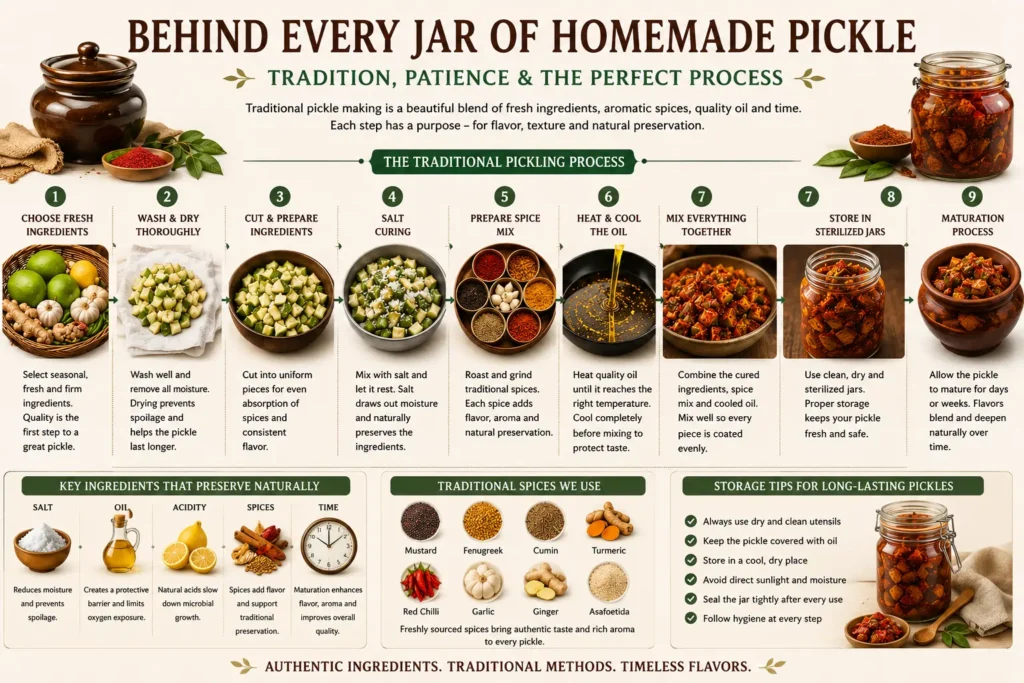
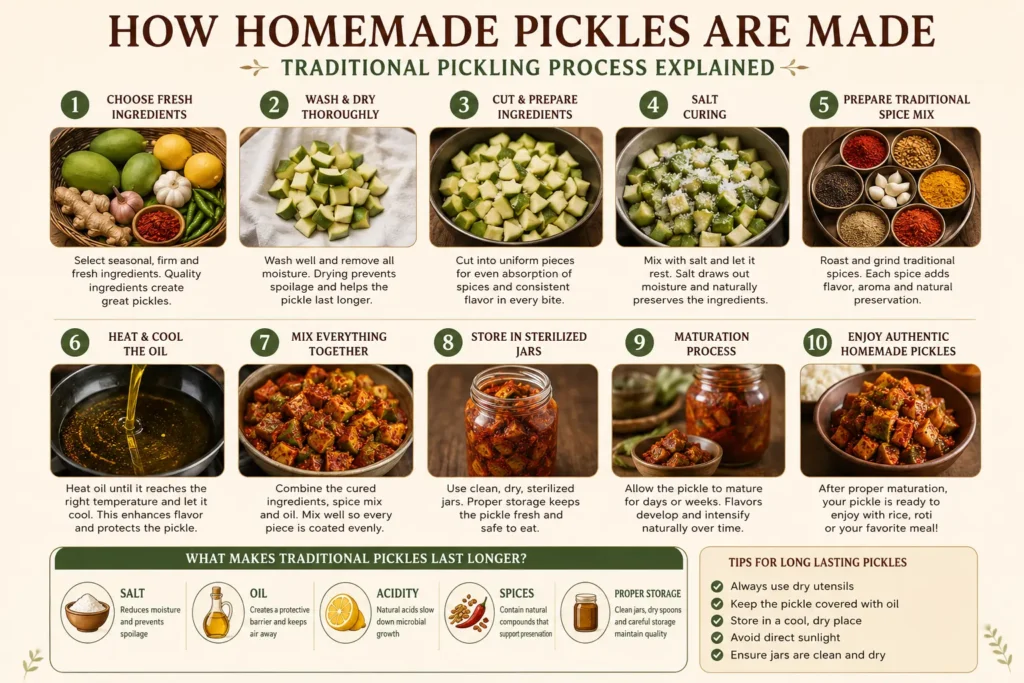
Step 1: Choosing Fresh Ingredients
The first step in traditional pickle preparation is selecting the right ingredients.
This stage decides the foundation of the final flavor.
Selecting Seasonal Produce
Traditional pickle makers often choose ingredients during their natural season.
Examples:
- Raw mangoes during mango season
- Fresh lemons during harvest periods
- Seasonal vegetables
Seasonal ingredients often provide better:
- Taste
- Texture
- Aroma
Checking Quality
Good pickle ingredients should be:
- Fresh
- Firm
- Free from damage
- Properly matured
For example, mango pickles require mangoes that are raw enough to maintain texture but mature enough to develop flavor.
Choosing Fresh Spices
Spices are not just flavor additions.
They create the identity of the pickle.
Common spices include:
- Mustard seeds
- Fenugreek
- Turmeric
- Chilli powder
- Asafoetida
- Garlic
- Ginger
Each ingredient contributes a different layer.
Step 2: Washing and Drying Ingredients
After selecting ingredients, cleaning becomes essential.
This step is often underestimated, but moisture control is one of the biggest secrets behind successful pickling.
Why Drying Matters
Water can affect pickle quality.
Extra moisture may:
- Reduce shelf stability
- Affect texture
- Encourage unwanted microbial growth
Traditional pickle makers carefully dry ingredients before adding spices.
Traditional Drying Methods
Some ingredients are:
- Air dried
- Sun dried
- Wiped completely dry
Sun drying is especially common in traditional preparation because it helps remove surface moisture.
Step 3: Cutting and Preparing Ingredients
The next stage is preparing the ingredients into suitable pieces.
Size matters more than many people realize.
Uniform Cutting
Evenly cut pieces help:
- Absorb spices consistently
- Develop balanced flavor
- Maintain texture
Large pieces may absorb flavors slowly, while very small pieces may become soft quickly.
Surface Area and Flavor Absorption
When ingredients are cut, more surface area becomes exposed.
This allows:
- Salt penetration
- Spice absorption
- Oil coating
The cutting style is part of traditional pickle craftsmanship.
Step 4: Salt Curing Process
Salt is one of the oldest preservation ingredients used in traditional food preparation.
In pickle making, salt does much more than add taste.
Reducing Moisture
Salt helps draw moisture from ingredients through osmosis.
This reduces available water inside the pickle.
Lower moisture creates a less favorable environment for many spoilage organisms.
Improving Texture
Salt curing also affects texture.
It helps ingredients develop the right balance between:
- Firmness
- Softness
- Bite
Building Flavor
Salt allows ingredients to begin developing their final taste profile before spices and oil are added.
This is why many traditional pickle recipes start with salt.
Step 5: Preparing the Traditional Spice Mix
The spice mixture is the heart of many Indian pickles.
Different regions have developed their own combinations over generations.
Mustard
Mustard seeds provide:
- Sharp flavor
- Aroma
- Traditional character
Fenugreek
Fenugreek adds:
- Slight bitterness
- Depth
- Complexity
Turmeric
Turmeric contributes:
- Color
- Earthy aroma
- Traditional value
Chilli
Chilli creates:
- Heat
- Color
- Strong flavor identity
Garlic and Ginger
These add:
- Aroma
- Richness
- Savory notes
The final taste comes from the balance between all spices.
Step 6: Heating the Oil
Oil plays an important role in traditional pickle preparation.
Common oils include:
- Gingelly oil
- Sesame oil
- Mustard oil
- Regional cooking oils
Why Oil Is Added
Oil helps:
- Carry spice flavors
- Coat ingredients
- Reduce direct exposure to air
Cooling Before Mixing
Traditional methods often allow heated oil to cool before mixing.
This helps maintain:
- Spice quality
- Ingredient texture
- Overall balance
The oil becomes part of the flavor system, not just a preservative.
Step 7: Mixing Ingredients Together
After preparing the ingredients, salt, spices, and oil are combined.
This stage requires careful balance.
Traditional makers focus on:
- Correct spice ratio
- Even coating
- Proper mixing
Every piece should receive enough:
- Salt
- Spice
- Oil
Small-batch preparation helps maintain consistency.
Step 8: Storing in Sterilized Jars
Storage is the final protection step.
Traditionally, pickles are stored in clean containers.
Why Clean Jars Matter
A properly prepared jar helps protect the pickle from contamination.
Important practices include:
- Using dry glass jars
- Keeping lids clean
- Avoiding moisture
- Using dry spoons
Even a good recipe can fail with poor storage habits.
Step 9: The Maturation Process
One of the biggest differences between freshly mixed pickle and traditional pickle is time.
Pickles improve as they mature.
During maturation:
- Spices penetrate ingredients
- Flavors combine
- Texture develops
- Aroma becomes stronger
This waiting period creates the deep taste associated with traditional pickles.
A good pickle is not rushed.
Traditional Kerala Pickle Making: A Culinary Heritage
Kerala has a strong tradition of pickle preparation.
The region’s food culture developed around:
- Seasonal ingredients
- Strong spice combinations
- Coconut and sesame-based oils
- Traditional preservation methods
Popular Kerala-style pickles include:
- Mango pickle
- Lemon pickle
- Fish pickle
- Prawn pickle
- Garlic pickle
These recipes represent more than taste.
They represent family traditions and generations of food knowledge.
Seafood Pickles: A Kerala Specialty
Kerala cuisine is known for seafood-based pickles.
Fish and prawn pickles require careful preparation because seafood needs additional attention.
Important steps include:
- Cleaning seafood properly
- Removing excess moisture
- Preparing spice base
- Cooking or frying before mixing
- Proper storage
Traditional seafood pickles combine preservation knowledge with coastal food culture.
Common Mistakes When Making Homemade Pickles
Even traditional recipes can fail if important steps are ignored.
Using Wet Ingredients
Extra moisture can affect quality.
Always dry ingredients properly.
Using Wet Spoons
Water introduced during serving can reduce freshness.
Incorrect Salt Ratio
Too little or too much salt can affect taste and preservation.
Poor Quality Oil
Oil influences both flavor and final texture.
Dirty Containers
Storage hygiene matters as much as preparation.
How Picklory Makes Authentic Homemade Pickles
At Picklory, traditional pickle making focuses on preserving authentic flavors through careful preparation.
The process includes:
- Quality ingredient selection
- Traditional Kerala-inspired recipes
- Balanced spice combinations
- Small-batch preparation
- Careful storage practices
The goal is simple:
Bring the taste of traditional homemade pickles to modern kitchens.
Frequently Asked Questions
How are homemade pickles traditionally made?
Traditional homemade pickles are made by selecting fresh ingredients, drying them properly, mixing with salt and spices, adding oil or acidic ingredients, and allowing time for natural flavor development.
Why are ingredients dried before making pickles?
Drying reduces excess moisture, which helps maintain texture and supports better preservation.
Why is salt added first in many pickle recipes?
Salt helps remove moisture, improves flavor, and creates conditions that support longer storage.
How long does homemade pickle take to mature?
The maturation time depends on the recipe. Some pickles develop flavor within days, while others improve over weeks.
Can homemade pickles be made without preservatives?
Yes. Traditional methods often rely on natural preservation techniques such as salt, oil, acidity, drying, and proper storage.
Final Thoughts
Homemade pickle making is not simply mixing ingredients together.
It is a traditional process where every step has a purpose.
Selecting fresh ingredients creates the foundation.
Drying controls moisture.
Salt builds preservation.
Spices create identity.
Oil develops flavor.
Time completes the process.
Traditional pickles show how generations of food knowledge created practical preservation methods long before modern technology.
A truly authentic pickle is not only food — it is a piece of culinary heritage.
Explore Picklory’s collection of authentic homemade Kerala pickles and experience traditional flavors made with care.