
Estimated Reading Time: 6–7 Minutes
Homemade pickles are known for their rich flavours, traditional recipes, and long-lasting freshness. While spices, salt, and fresh ingredients often receive the most attention, one ingredient quietly determines a pickle’s taste, texture, and shelf life—oil.
Choosing the right oil isn’t just about flavour. It acts as a natural preservative, protects the pickle from air and moisture, binds spices to every ingredient, and helps maintain authenticity. Different regions across India have relied on different oils for generations, each bringing its own unique character to the pickle.
Whether you’re making mango pickle, lemon pickle, garlic pickle, or gooseberry pickle, selecting the right oil can make all the difference.
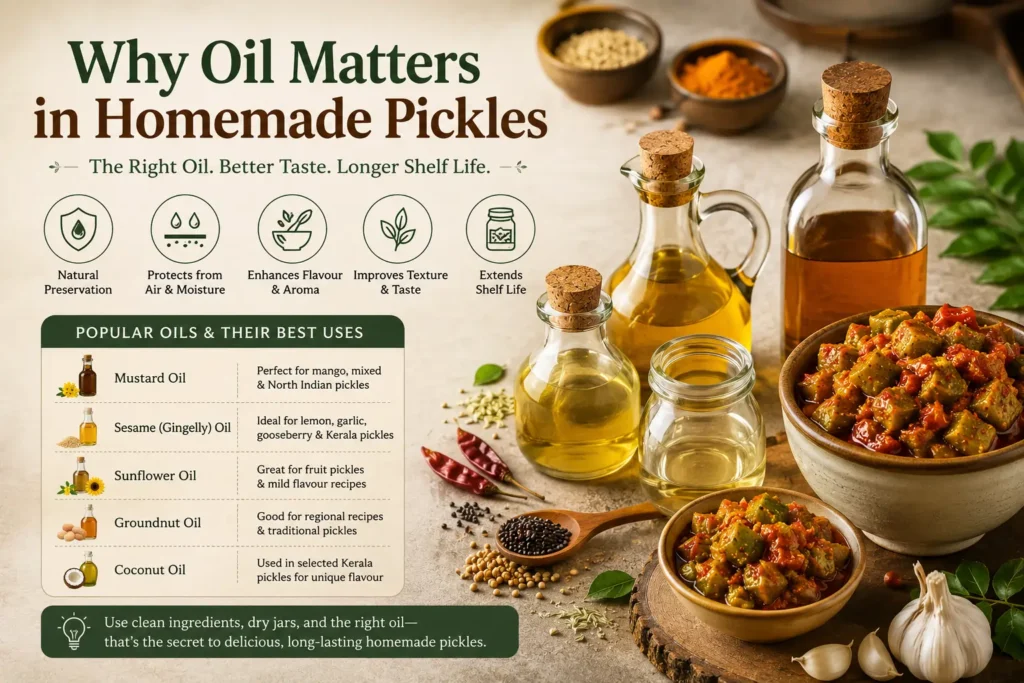
Why Oil Matters in Homemade Pickles
Oil does much more than simply coat the ingredients.
It plays several important roles:
- Acts as a natural barrier against air and moisture
- Helps slow spoilage when used with sufficient salt and acidity
- Enhances the flavour of spices
- Allows spices to coat ingredients evenly
- Helps maintain texture during storage
- Supports longer shelf life when proper pickling practices are followed
Without enough oil, homemade pickles are more likely to spoil due to air exposure and moisture.
How Oil Helps Preserve Pickles
Traditional pickling relies on a combination of oil, salt, acidity, clean jars, and dry ingredients. Oil alone cannot preserve a pickle, but it plays an important supporting role.
A proper layer of oil:
- Reduces direct contact with oxygen
- Creates a protective barrier over the ingredients
- Helps keep spices evenly distributed
- Minimizes surface moisture exposure
- Preserves aroma and flavour over time
For best results, always ensure the pickle ingredients remain fully covered with oil during storage.
Cold-Pressed vs Refined Oils
Choosing the type of oil is just as important as choosing the variety.
| Feature | Cold-Pressed Oil | Refined Oil |
| Flavour | Rich and natural | Mild and neutral |
| Traditional use | Widely preferred | Less common |
| Natural compounds | Better retained | Reduced during processing |
| Best suited for | Authentic homemade pickles | Everyday cooking |
Premium homemade pickle makers often prefer cold-pressed oils because they contribute to authentic taste and traditional preparation.
Best Oils for Homemade Pickles
| Oil | Best For | Flavour | Preservation |
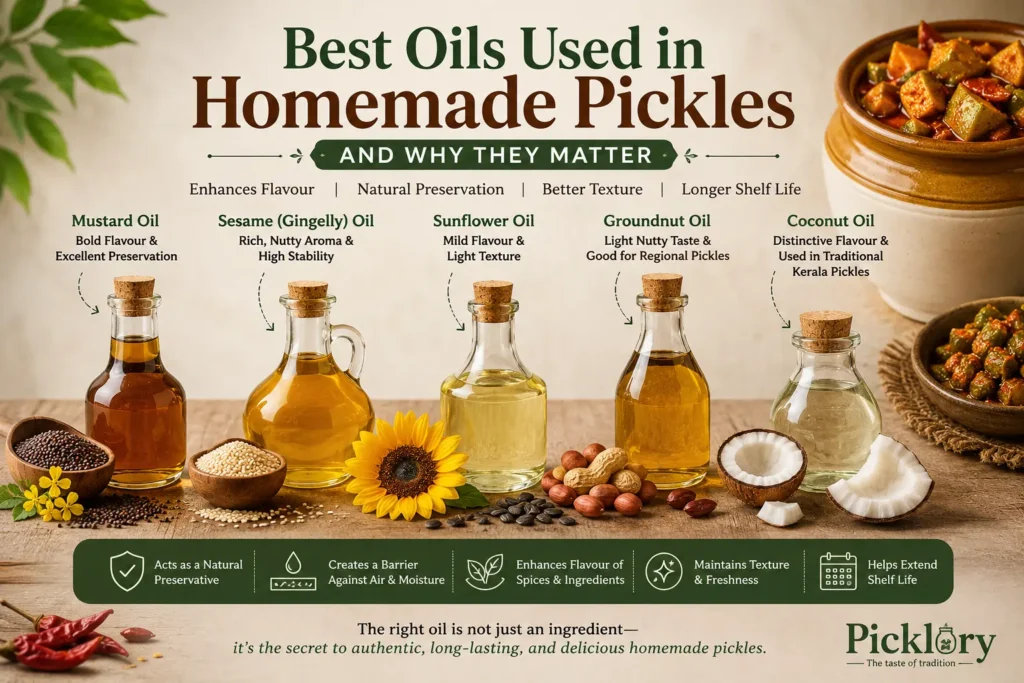
| Mustard Oil | Mango, Mixed Pickles | Bold | Excellent |
| Sesame (Gingelly) Oil | Lemon, Garlic, Gooseberry | Rich & Nutty | Excellent |
| Sunflower Oil | Fruit Pickles | Mild | Good |
| Groundnut Oil | Regional Recipes | Light Nutty | Good |
| Coconut Oil | Selected Kerala Pickles | Distinctive | Moderate |
Mustard Oil – The Traditional North Indian Choice
Mustard oil has been used in Indian pickling for generations, especially in North and East India.
Why it’s popular
- Strong, bold flavour
- Naturally complements spicy pickles
- Good stability for long-term storage
- Traditionally heated before use to reduce raw pungency
Best suited for:
- Mango pickle
- Mixed vegetable pickle
- Green chilli pickle
Its distinctive flavour becomes part of the pickle’s identity, making it the preferred choice for many traditional recipes.
Sesame (Gingelly) Oil – Kerala’s Favourite
Sesame oil, commonly called gingelly oil, is the traditional choice in Kerala and many parts of South India.
Benefits
- Rich, nutty aroma
- Excellent flavour stability
- Naturally complements South Indian spices
- Ideal for traditional homemade recipes
Best suited for:
- Lemon pickle
- Garlic pickle
- Gooseberry pickle
- Kerala-style mango pickle
Its smooth flavour enhances spices without overpowering them, making it a favourite in authentic Kerala kitchens.
Sunflower Oil – A Mild Alternative
Sunflower oil is suitable when you want the ingredients to remain the primary flavour.
Advantages
- Neutral taste
- Light texture
- Rich in Vitamin E
- Doesn’t overpower fruit pickles
It works particularly well for:
- Sweet mango pickle
- Fruit pickles
- Mild homemade recipes
Although it doesn’t offer the same traditional flavour as mustard or sesame oil, it is a practical option for lighter pickles.
Other Oils You Can Use
Groundnut Oil
Groundnut oil has a mild nutty flavour and is used in some regional pickle recipes. It offers good stability and blends well with spices.
Coconut Oil
Coconut oil is used in selected Kerala recipes, particularly those meant for shorter storage. Its distinct flavour makes it unsuitable for every type of pickle.
Olive Oil
Extra virgin olive oil can be used in Mediterranean-style pickles, but it is generally not recommended for traditional Indian pickles because its flavour differs significantly from authentic recipes.
Oils to Avoid
Some oils are less suitable for homemade pickles.
Avoid:
- Standard olive oil for traditional Indian recipes
- Refined vegetable oil blends with no distinctive flavour
- Oils with strong artificial aromas
- Old or reused cooking oil
Fresh, good-quality oil always produces better results.
Which Oil Is Best for Different Pickles?
| Pickle Type | Recommended Oil |
| Mango Pickle | Mustard Oil |
| Lemon Pickle | Sesame Oil |
| Garlic Pickle | Sesame Oil |
| Gooseberry Pickle | Sesame Oil |
| Mixed Vegetable Pickle | Mustard Oil |
| Fruit Pickles | Sunflower Oil |
Tips for Using Oil in Homemade Pickles
Follow these best practices for better flavour and shelf life:
- Heat mustard oil where the recipe requires it, then cool before mixing.
- Ensure all ingredients are completely dry before pickling.
- Sterilize jars thoroughly before use.
- Keep ingredients fully covered with oil.
- Always use a clean, dry spoon.
- Store jars in a cool, dry place away from direct sunlight.
These simple practices help maintain freshness and reduce the risk of spoilage.
Frequently Asked Questions
Which oil is best for mango pickle?
Mustard oil is traditionally considered the best choice because of its bold flavour and excellent preservation qualities.
Why is sesame oil used in Kerala pickles?
Its rich aroma, stability, and compatibility with South Indian spices make it the preferred oil for many Kerala recipes.
Can sunflower oil be used for homemade pickles?
Yes. It works well for fruit pickles and recipes where a mild flavour is preferred.
Does oil alone preserve pickles?
No. Successful preservation depends on the correct balance of oil, salt, acidity, hygiene, and proper storage.
Should mustard oil be heated before use?
Yes. Traditional recipes usually heat mustard oil until it reaches its smoking point, then cool it before adding it to the pickle to mellow its raw flavour.
Final Thoughts
The oil you choose has a direct impact on your homemade pickle’s flavour, texture, authenticity, and shelf life. While mustard oil remains the preferred choice for many North Indian recipes, sesame (gingelly) oil continues to define the taste of traditional Kerala pickles. Sunflower, groundnut, and coconut oils also have their place when matched with the right recipe.
At Picklory, we believe authentic homemade pickles start with premium ingredients and time-tested preparation methods. That’s why our Kerala-style pickles are crafted using carefully selected oils, traditional recipes, and natural ingredients to deliver the rich flavours of homemade pickling in every jar.