
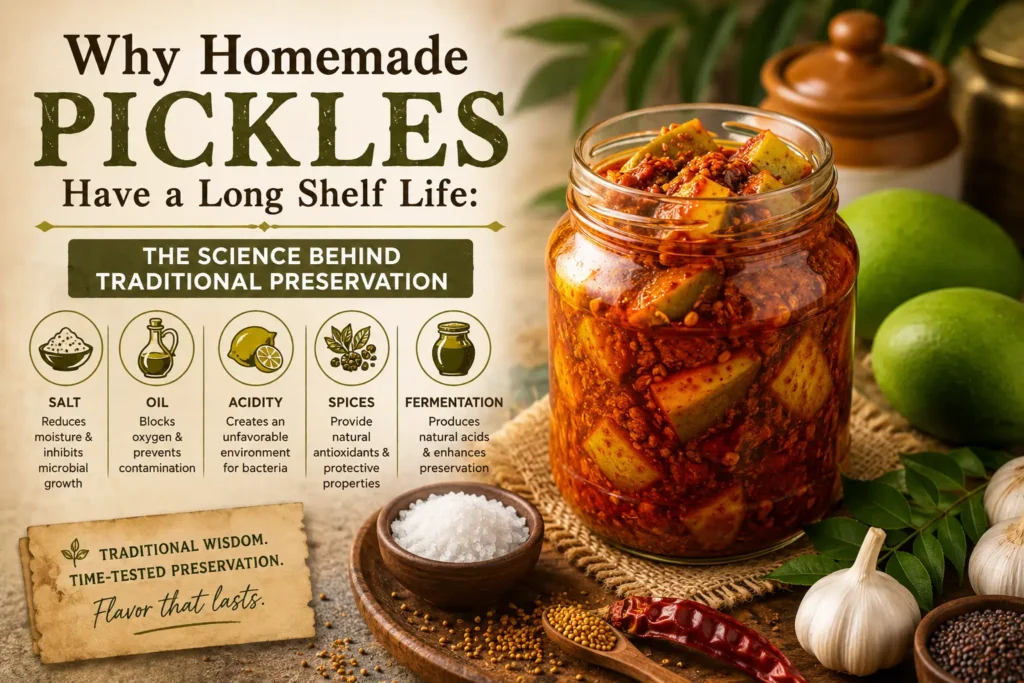
For generations, Indian households have stored homemade pickles for months—and sometimes even years—without relying heavily on artificial preservatives. Long before refrigeration became common, traditional pickle makers understood how to use salt, oil, spices, and fermentation to preserve food naturally.
Many people today wonder: Why do homemade pickles last so long?
The answer lies in a fascinating combination of traditional wisdom and food science. Homemade pickles are preserved through multiple natural barriers that make it difficult for spoilage-causing microorganisms to survive.
Salt removes moisture, oil blocks oxygen, acidity creates an unfavorable environment for bacteria, and spices contribute additional protective properties.
In this guide, we’ll explore the science behind traditional pickle preservation and explain why properly prepared homemade pickles can remain fresh, flavorful, and enjoyable for extended periods
Why Do Homemade Pickles Last So Long?
Homemade pickles have a long shelf life because traditional preservation methods use salt, oil, acidity, spices, controlled moisture, and sometimes fermentation to create an environment that discourages spoilage-causing microorganisms.
Rather than relying on a single preservation method, traditional pickle recipes use several protective mechanisms simultaneously. This layered approach has helped families preserve seasonal fruits and vegetables for centuries.
What Causes Food to Spoil?
To understand why pickles last so long, it helps to understand why food spoils in the first place.
Fresh fruits and vegetables contain high levels of moisture and nutrients. While this makes them healthy and delicious, it also makes them ideal environments for microorganisms.
Common causes of food spoilage include:
- Bacteria
- Mould
- Yeast
- Excess moisture
- Oxygen exposure
- Natural enzyme activity
When these factors are present, food begins to deteriorate, lose flavor, develop unpleasant odors, and eventually become unsafe to consume.
Traditional pickle preservation works by reducing or eliminating the conditions these microorganisms need to grow.
The Science Behind Traditional Pickle Preservation
One reason traditional Indian pickles are remarkably durable is that they use multiple preservation barriers at the same time.
These barriers include:
- Salt
- Oil
- Acidity
- Spices
- Reduced moisture
- Fermentation (in some recipes)
Food scientists often refer to this concept as “hurdle technology,” where multiple preservation methods work together to prevent spoilage.
Each barrier makes survival more difficult for spoilage organisms. Together, they create a highly effective natural preservation system.
How Salt Helps Preserve Pickles
Salt is one of the oldest and most effective food preservation ingredients known to humans.
The Role of Osmosis
When salt is added to fruits or vegetables, it draws water out of the cells through a process called osmosis.
This process:
- Reduces available moisture
- Lowers water activity
- Creates conditions that inhibit microbial growth
- Helps preserve texture
Since bacteria and mould require moisture to multiply, reducing available water significantly slows spoilage.
Why Traditional Pickle Makers Use Rock Salt
Traditional Indian pickle recipes often use rock salt or coarse salt because it dissolves gradually and supports long-term preservation.
Benefits include:
- Better moisture control
- Enhanced flavor development
- Consistent preservation performance
- Traditional authenticity
Salt is often the first line of defense in homemade pickle preservation.
Why Oil Plays a Critical Role
Oil-based pickles are especially common in Kerala and other parts of India.
A thick layer of oil serves as a protective shield that helps preserve the pickle for extended periods.
How Oil Protects Pickles
Oil creates a barrier between the pickle and the surrounding air.
This helps:
- Reduce oxygen exposure
- Prevent contamination
- Protect texture
- Slow oxidation
Without sufficient oil coverage, the risk of spoilage can increase significantly.
Traditional Oils Used in Indian Pickles
Different regions use different oils based on local culinary traditions.
Common examples include:
- Gingelly (sesame) oil
- Mustard oil
- Coconut oil in select preparations
- Other regional oils
These oils contribute both flavor and preservation benefits.
Acidity: Nature’s Preservation System
Acidity is another powerful preservation mechanism.
Many traditional pickles naturally contain acidic ingredients that help create conditions unfavorable for spoilage organisms.
Common Sources of Acidity
Traditional pickle recipes may use:
- Lemon
- Tamarind
- Vinegar
- Naturally produced fermentation acids
These ingredients lower the pH of the pickle mixture.
Why Acidic Foods Last Longer
Acidic environments can:
- Slow bacterial growth
- Support preservation
- Improve flavor stability
- Enhance shelf life
This is one reason lemon and tamarind pickles often remain stable for long periods when properly prepared.
How Traditional Spices Support Preservation
Indian pickle recipes rely heavily on spices. While their primary role is flavor, many spices also contribute to the overall preservation environment.
Turmeric
Turmeric contains natural antioxidant compounds that help maintain product quality over time.
Mustard Seeds
Mustard seeds have been used in traditional preservation methods for generations and are a staple ingredient in many Indian pickles.
Fenugreek
Fenugreek contributes distinctive flavor while supporting the overall balance of the preservation system.
Garlic
Garlic has long been used in traditional food preservation practices and remains a common ingredient in pickle recipes.
Chilli
Apart from providing heat and flavor, chilli contributes to the overall preservation environment.
Together, these spices help create a complex and stable pickle matrix.
The Role of Fermentation in Pickle Shelf Life
Not all pickles are fermented, but many traditional recipes rely on fermentation as part of the preservation process.
What Is Fermentation?
Fermentation occurs when beneficial microorganisms convert natural sugars into organic acids.
This process naturally transforms the food while helping preserve it.
How Fermentation Extends Shelf Life
Fermentation can:
- Produce natural acids
- Create an unfavorable environment for harmful microbes
- Develop deeper flavors
- Improve storage stability
Many traditional Indian pickles benefit from controlled fermentation during the curing process.
The Hidden Science of Moisture Control
One of the most overlooked reasons homemade pickles last so long is moisture management.
Traditional pickle makers are extremely careful about preventing unwanted water from entering the pickle jar.
Why?
Because moisture is one of the biggest enemies of long-term preservation.
Traditional practices include:
- Sun-drying ingredients before preparation
- Thoroughly drying jars
- Using dry utensils
- Avoiding wet hands
- Keeping ingredients submerged in oil or brine
By limiting excess moisture, pickle makers reduce opportunities for microbial growth.
Preservation Chemistry: Why Traditional Pickles Don’t Spoil Easily
Traditional pickle preservation is built on several scientific principles working together.
Osmotic Dehydration
Salt pulls water from ingredients, reducing microbial activity.
Reduced Water Activity
Microorganisms struggle to grow when available moisture is limited.
Acidic Environment
Low pH levels make survival difficult for many spoilage organisms.
Antioxidant Support
Spices such as turmeric contribute antioxidant compounds that help maintain quality.
Protective Oil Layer
Oil creates a physical barrier that limits oxygen exposure and contamination.
These mechanisms explain why properly prepared homemade pickles can remain stable for surprisingly long periods.
How Long Do Homemade Pickles Last?
Shelf life varies depending on ingredients, preparation methods, storage conditions, and the type of pickle.
Room Temperature Storage
Properly prepared traditional pickles may last:
- Standard mixed pickles: 2–3 weeks
- Chilli pickles: 8–10 months
- Oil-based mango pickles: Up to 12 months
Refrigerated Storage
Refrigeration generally extends shelf life.
Examples include:
- Refrigerated pickles: 3–4 weeks
- Pickled onions: 4–6 weeks
- Many homemade pickles: 6 months or longer depending on preparation
Commercially Packed Pickles
- Unopened shelf life: 1–2 years
- Opened shelf life: Several months when stored properly
Actual shelf life depends on recipe formulation and handling practices.
Signs That Homemade Pickles Have Spoiled
While traditional preservation methods are highly effective, homemade pickles can still spoil if improperly prepared or stored.
Watch for:
- Mold growth
- White surface film
- Cloudy or fizzy brine
- Rancid odor
- Mushy texture
- Bulging lids
- Leakage
- Unusual bitterness
- Grey, black, or green discoloration
If spoilage is suspected, discard the product.
Best Practices to Maximize Pickle Shelf Life
If you want your homemade pickles to stay fresh for longer, follow these traditional practices.
Use Sterilized Containers
Clean, dry jars reduce contamination risk.
Keep Ingredients Fully Covered
Maintain complete coverage with oil or brine whenever required by the recipe.
Use Dry Utensils
Never introduce wet spoons into the jar.
Seal Containers Properly
Minimize exposure to air and contaminants.
Store in Cool, Dark Locations
Avoid excessive heat and direct sunlight.
Refrigerate After Opening When Appropriate
Many pickles benefit from refrigeration once opened.
Maintain the Oil Layer
For oil-based pickles, ensure the protective layer remains intact.
Why Traditional Kerala Pickles Have Earned Generational Trust
Kerala’s pickle-making traditions combine seasonal ingredients, carefully selected spices, controlled curing methods, and time-tested preservation practices.
These recipes evolved long before modern food preservation technologies existed.
Families relied on:
- Correct salt ratios
- Proper oil coverage
- Seasonal preparation
- Sun-drying techniques
- Spice-based preservation systems
The result is a preservation method that remains relevant even today.
Why Picklory Follows Traditional Preservation Methods
At Picklory, we believe authentic flavor begins with authentic preparation.
Our approach draws inspiration from traditional Kerala pickle-making practices that have been refined over generations.
Premium Ingredients
We start with carefully selected fruits, vegetables, spices, and oils.
Traditional Recipes
Our preparations respect regional traditions and proven preservation methods.
Naturally Preserved
We focus on techniques rooted in traditional food wisdom rather than relying solely on artificial preservation systems.
Small-Batch Preparation
Careful production helps maintain consistency, flavor, and quality.
The result is a pickle experience that reflects Kerala’s rich culinary heritage.
Frequently Asked Questions
Why do homemade pickles last for months?
Homemade pickles last for months because salt, oil, acidity, spices, and moisture control work together to slow microbial growth and reduce spoilage.
Do homemade pickles require preservatives?
Traditional pickle recipes often rely primarily on natural preservation techniques rather than synthetic preservatives.
How long can homemade pickles last?
Shelf life depends on ingredients, preparation methods, and storage conditions. Some traditional oil-based pickles can remain stable for many months when properly prepared.
Can homemade pickles spoil?
Yes. Improper preparation, moisture contamination, insufficient oil coverage, or poor storage practices can lead to spoilage.
What is the most important factor in pickle preservation?
There is no single factor. Salt, acidity, moisture control, oil coverage, and proper storage all work together to create a stable preservation system.
Final Thoughts
The reason homemade pickles have a long shelf life isn’t a mystery—it’s science refined through generations of traditional food wisdom.
Salt reduces moisture. Oil blocks oxygen. Acidity discourages spoilage organisms. Spices contribute protective properties. Fermentation creates natural preservation pathways. Together, these mechanisms create one of the world’s most effective natural food preservation systems.
Understanding this science helps us appreciate why traditional Indian pickle-making techniques have survived for centuries. They don’t just preserve food—they preserve flavor, culture, and culinary heritage.
Looking for authentic Kerala pickles prepared using traditional methods? Explore Picklory’s collection of naturally preserved homemade pickles and experience the taste of time-tested craftsmanship.