
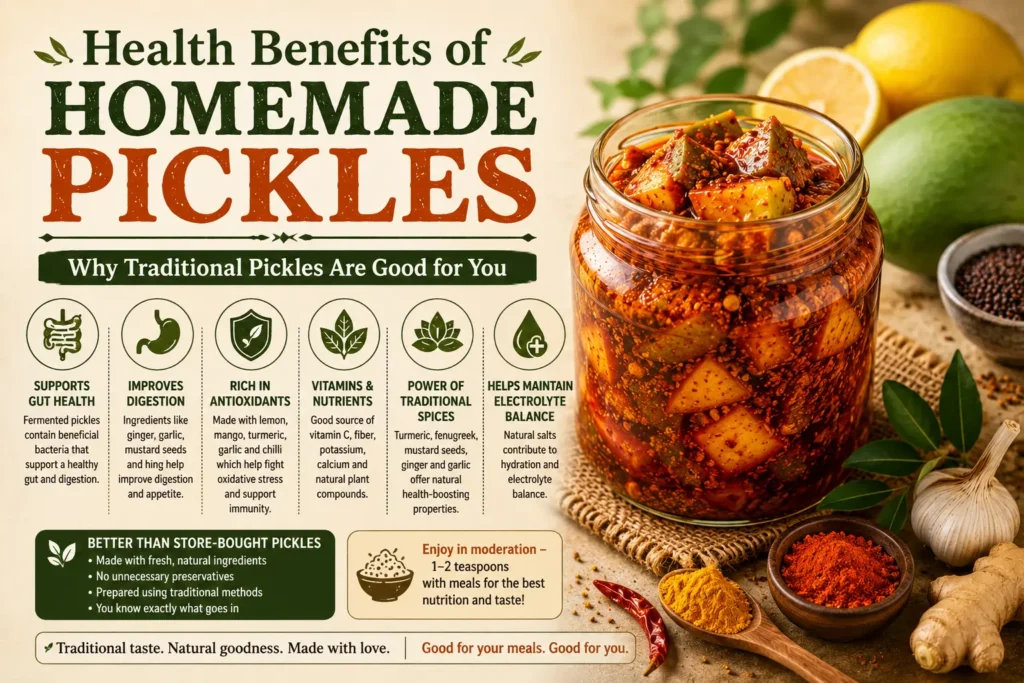
Homemade pickles are more than a flavorful side dish. When prepared using traditional methods, they provide beneficial nutrients, antioxidants, digestive-supporting ingredients, and natural preservation without relying on excessive processing.
Unlike many commercially produced pickles, homemade pickles are typically made with fresh fruits, vegetables, natural oils, rock salt, and traditional spices. This combination makes them a nutritious addition to a balanced diet when consumed in moderation.
Are Homemade Pickles Healthy?
Yes, homemade pickles can be healthy when made with quality ingredients and eaten in moderate amounts.
Traditional pickles contain fruits, vegetables, spices, and natural preservatives that contribute vitamins, antioxidants, fiber, and beneficial plant compounds. Some fermented varieties may also support gut health through natural microbial activity.
1. Homemade Pickles May Support Gut Health
Traditional fermented pickles contain naturally occurring beneficial bacteria that develop during the fermentation process. These microorganisms help maintain a healthy gut environment and support digestive function.
A healthy gut plays an important role in digestion, nutrient absorption, and overall well-being. This is one reason fermented foods have remained part of traditional diets for centuries.
Popular gut-friendly foods include:
- Naturally fermented pickles
- Curd
- Fermented rice dishes
- Other traditional fermented foods
2. Helps Improve Digestion
Pickles are traditionally served alongside meals because they stimulate appetite and complement heavier foods.
Many ingredients commonly used in homemade pickles have long been associated with digestive support.
These include:
- Ginger
- Garlic
- Hing (asafoetida)
- Mustard seeds
- Fenugreek
Together, these ingredients may help improve digestive comfort and make meals easier to enjoy.
3. Rich Source of Antioxidants
Homemade pickles contain several antioxidant-rich ingredients that help protect cells from oxidative stress.
Common antioxidant-rich pickle ingredients include:
- Raw mango
- Lemon
- Turmeric
- Garlic
- Green chilli
Antioxidants help neutralize free radicals and support overall health. Regular consumption of antioxidant-rich foods can be part of a healthy lifestyle.
4. Provides Essential Vitamins and Nutrients
The nutritional value of homemade pickles depends on the ingredients used, but many traditional recipes contain valuable nutrients.
Homemade pickles may provide:
- Vitamin C
- Dietary fiber
- Potassium
- Calcium
- Natural plant compounds
- Antioxidants
Lemon pickles are particularly known for their Vitamin C content, while mango pickles contribute fiber and beneficial plant nutrients.
5. Traditional Spices Add Health Benefits
One of the biggest advantages of homemade pickles is the use of traditional Indian spices.
Turmeric
Turmeric contains curcumin, a natural compound known for its antioxidant properties.
Fenugreek
Fenugreek contains fiber and plant compounds that contribute to overall nutritional value.
Mustard Seeds
Mustard seeds provide natural nutrients while enhancing flavor and preservation.
Ginger
Ginger has traditionally been used to support digestion and digestive comfort.
Garlic
Garlic contains beneficial sulfur compounds and antioxidants that contribute to its nutritional profile.
These spices not only improve taste but also increase the overall nutritional value of homemade pickles.
6. May Help Maintain Hydration and Electrolyte Balance
Traditional pickles contain natural salts that contribute electrolytes to the diet.
Electrolytes help regulate fluid balance within the body and play an important role in normal muscle and nerve function. This is one reason pickles have traditionally been consumed in warm climates.
7. Supports Healthy Eating Habits
Many people underestimate the importance of food enjoyment.
A small serving of homemade pickle can make healthy meals more satisfying and flavorful. This can encourage people to eat more home-cooked food and fewer heavily processed alternatives.
Homemade pickles pair well with:
- Rice dishes
- Chapati
- Kerala meals
- Curd rice
- Traditional Indian foods
Why Homemade Pickles Are Better Than Many Commercial Pickles
The quality of a pickle depends largely on how it is made.
Homemade pickles often offer several advantages over commercially processed products:
Fresh Ingredients
Traditional recipes use fresh fruits, vegetables, and spices.
No Unnecessary Preservatives
Many homemade pickles rely on natural preservation methods rather than artificial additives.
Authentic Preparation Methods
Traditional curing and fermentation methods help preserve both flavor and nutritional value.
Better Ingredient Transparency
You know exactly what goes into a homemade pickle.
Enjoy Homemade Pickles in Moderation
While homemade pickles offer several benefits, moderation remains important because they contain salt.
A serving of 1–2 teaspoons with meals is generally enough to enjoy the flavor and nutritional benefits without excessive sodium intake.
The goal is to use pickles as a complement to a balanced diet rather than consuming large quantities.
Conclusion
Homemade pickles are far more than a traditional condiment. They provide antioxidants, beneficial nutrients, digestive-supporting ingredients, and the goodness of natural fruits, vegetables, and spices.
When prepared using traditional methods and consumed in moderation, homemade pickles can be a healthy addition to everyday meals. Their combination of nutrition, flavor, and traditional food wisdom explains why they have remained a staple in Indian households for generations.
Whether you prefer mango pickle, lemon pickle, garlic pickle, or mixed vegetable pickle, homemade varieties offer a simple way to add both taste and nutritional value to your diet.