
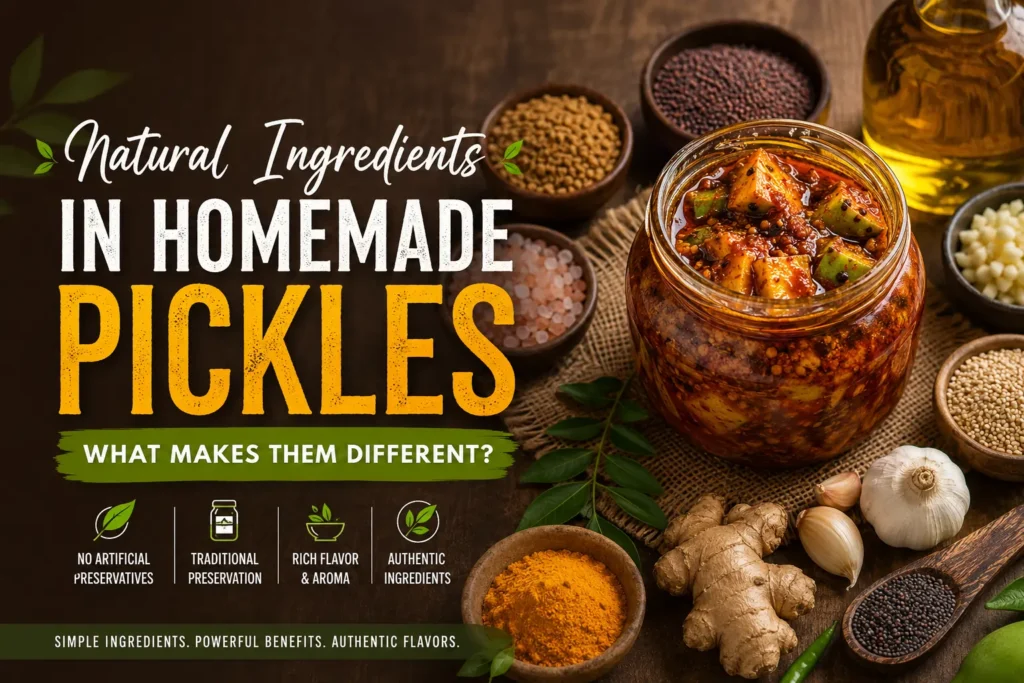
For generations, homemade pickles have been prepared using simple ingredients found in traditional kitchens — salt, oil, spices, herbs, and seasonal produce. Unlike many commercial pickles that depend on artificial additives for consistency and longer storage, authentic homemade pickles rely on the natural abilities of carefully chosen ingredients.
The secret behind traditional pickles is not a single ingredient. It is the way each ingredient works together.
Rock salt helps reduce moisture. Mustard oil creates a protective layer. Spices such as mustard seeds, turmeric, garlic, ginger, and hing add depth while supporting natural preservation. Together, these ingredients create the unique taste, aroma, and shelf life that make homemade pickles special.
So what makes natural ingredients in homemade pickles different?
The answer lies in the traditional food science behind every jar.
Why Ingredients Matter in Homemade Pickles
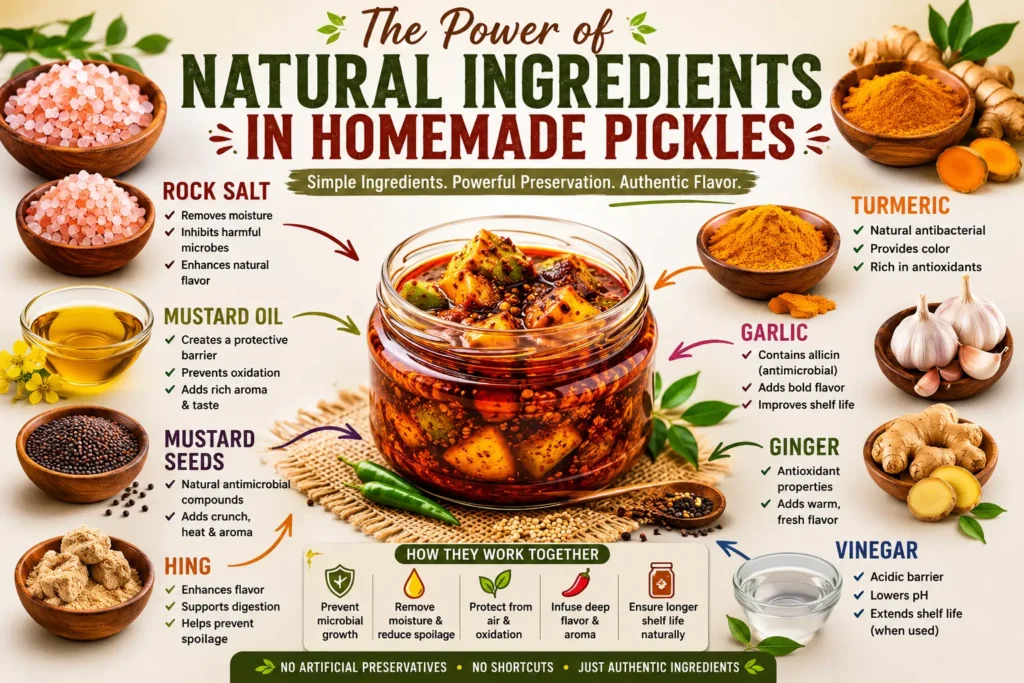
A pickle is more than a mixture of vegetables, fruits, spices, and oil. Each ingredient has a specific role.
Traditional pickle makers understood this through generations of experience:
- Ingredients control moisture
- Oils reduce exposure to air
- Salt creates an environment where unwanted microbes struggle to grow
- Spices contribute flavour and natural protective properties
- Acids help balance preservation and taste
This combination creates a layered preservation system without depending on artificial preservatives.
Natural ingredients also influence:
Flavour
Spices slowly release their aroma into the pickle, creating complex flavours that become richer over time.
Texture
Salt, oil, and preparation methods help maintain the desired texture of fruits and vegetables.
Shelf Life
Traditional preservation methods reduce factors that commonly cause spoilage, such as excess moisture and oxidation.
Rock Salt: The Foundation of Natural Preservation
Salt is one of the oldest natural preservation ingredients used in pickling.
But salt does much more than add taste.
How Salt Preserves Pickles
Salt works through a process called osmosis.
It draws moisture out of ingredients, reducing the water available for unwanted microbial growth.
This lower moisture environment helps the pickle stay stable for longer periods when stored properly.
Why Traditional Pickle Makers Prefer Rock Salt
Many traditional recipes use rock salt because it provides a clean mineral taste and blends slowly into the ingredients.
It helps:
- Enhance natural flavours
- Balance sour and spicy notes
- Support traditional preservation
- Improve overall taste development
Salt is not simply seasoning — it is one of the foundations of pickle making.
Mustard Oil: Nature’s Protective Shield
Mustard oil is a defining ingredient in many Indian and Kerala-style pickles.
Its role goes beyond flavour.
When enough oil covers the surface of a pickle, it creates a protective barrier between the food and air.
This helps reduce oxidation, which can affect flavour and freshness.
Why Mustard Oil Is Important in Pickles
Mustard oil provides:
- Rich aroma
- Strong traditional flavour
- Protective oil layer
- Better spice infusion
The oil allows spices to distribute throughout the pickle, creating the deep flavour associated with homemade varieties.
In traditional kitchens, mustard oil became a practical preservation tool long before modern food additives existed.
Mustard Seeds: Small Ingredient, Big Impact
Mustard seeds are one of the most important spices in traditional pickles.
They contribute:
- Heat
- Aroma
- Slight bitterness
- Characteristic pickle flavour
When crushed or mixed with moisture, mustard seeds release natural compounds that contribute to their distinctive taste.
The combination of mustard seeds with oil and salt creates the signature flavour profile found in many traditional pickles.
Hing (Asafoetida): The Hidden Flavour Builder
A small amount of hing can completely change the character of a pickle.
Known for its strong aroma, hing adds depth and balances strong flavours.
Traditional pickle makers use hing because it helps:
- Enhance spice blends
- Add savoury notes
- Improve aroma
- Support traditional preservation methods
It is one of those ingredients that may not dominate the flavour but makes the entire pickle taste more complete.
Turmeric: Colour, Aroma, and Tradition
Turmeric gives pickles their golden colour and earthy flavour.
Beyond appearance, turmeric has been valued in traditional cooking for generations.
It contributes:
- Natural colour
- Warm flavour
- Antioxidant compounds
In many Indian pickle recipes, turmeric is a key part of the spice combination that defines the final taste.
Garlic and Ginger: Traditional Flavour Powerhouses
Garlic and ginger are essential ingredients in many homemade pickles.
They add:
- Sharp flavour
- Fresh aroma
- Spicy warmth
Garlic contains natural compounds such as allicin that contribute to its characteristic aroma and taste.
Ginger adds brightness and balances the stronger flavours from oil, chilli, and spices.
Together, they create the bold flavour profile that makes homemade pickles memorable.
Vinegar: An Additional Preservation Support
Some pickle styles use vinegar as an additional preservation ingredient.
Vinegar increases acidity, creating a less favourable environment for unwanted microbial growth.
It also adds:
- Tangy flavour
- Brightness
- Balance
However, traditional Kerala-style pickles often rely more on salt, oil, and spices for their characteristic taste.
How Natural Ingredients Work Together
The real difference in homemade pickles comes from ingredient interaction.
No single ingredient creates the final result.
Instead:
Salt + Oil + Spices + Proper Preparation = Traditional Preservation
Each ingredient supports the others:
- Salt manages moisture
- Oil limits air exposure
- Spices build flavour
- Acidity adds balance
- Herbs and spices create complexity
This layered approach is why traditional pickles develop deeper taste over time.
Natural Ingredients vs Artificial Preservatives
| Natural Homemade Pickles | Commercial Pickles |
| Traditional ingredients | May include additives |
| Ingredient transparency | More processed formulations |
| Rich spice flavour | Standardized flavour |
| Traditional preparation | Industrial processing |
| Small-batch attention | Large-scale production |
The difference is not only about ingredients.
It is about the relationship between ingredients and preparation.
Benefits of Preservative-Free Homemade Pickles
Choosing naturally prepared pickles offers several advantages:
Cleaner Ingredient List
You know exactly what goes into the jar.
Authentic Taste
Traditional spices create flavours that are difficult to replicate with artificial flavouring.
Traditional Craftsmanship
Homemade pickles preserve cooking traditions passed through generations.
Natural Food Preservation
Traditional ingredients provide preservation support without relying on unnecessary additives.
How Picklory Uses Natural Ingredients in Homemade Pickles
At Picklory, every pickle is inspired by traditional Kerala preparation methods.
The focus is on:
- Quality ingredients
- Authentic spice combinations
- Small-batch preparation
- Traditional techniques
- Ingredient transparency
Each ingredient has a purpose — from the oil that protects the pickle to the spices that create its signature flavour.
The result is a pickle that reflects traditional homemade food culture.
Final Thoughts
The difference between homemade pickles and ordinary preserved foods comes down to understanding ingredients.
Salt, oil, spices, and herbs are not random additions. They are carefully selected elements that work together to create flavour, texture, aroma, and natural preservation.
Traditional pickle making is a form of food wisdom passed through generations.
Every jar tells the story of simple ingredients working together.
Explore Picklory’s authentic homemade Kerala pickle collection and experience traditional flavours made with natural ingredients.