
Introduction
Pickles have been part of traditional kitchens for generations. From spicy mango pickle served with rice to tangy lemon pickle enjoyed with everyday meals, pickles are more than just a side dish — they represent food traditions, preservation techniques, and regional flavours.
Today, consumers have two common choices: homemade pickles and commercial pickles.
Store shelves are filled with colourful jars promising long shelf life and consistent taste, while homemade pickles continue to attract people who value natural ingredients, traditional preparation, and authentic flavours.
But what is the real difference between homemade pickles vs commercial pickles?
The difference goes beyond taste. It starts with the ingredients selected, the oils used, preservation methods, production process, and the care involved in making each batch.
Homemade pickles are usually prepared using fresh seasonal ingredients, traditional recipes, small-batch methods, and natural preservation techniques. Commercial pickles are generally produced on a larger scale with standardized recipes, processing methods, and shelf-life considerations.
Both can be safe and enjoyable, but they offer very different experiences.
In this guide, we’ll compare homemade and commercial pickles based on:
- Ingredients and quality
- Health and nutrition
- Production methods
- Taste and texture
- Shelf life
- Sustainability
- Overall value
Why Compare Homemade and Commercial Pickles?
Choosing a pickle may look simple, but the jar often hides many differences.
A homemade pickle recipe usually reflects:
- Family traditions
- Regional flavours
- Seasonal ingredients
- Personal preparation methods
A commercial pickle is designed for:
- Large-scale production
- Consistent flavour
- Longer storage
- Wider availability
The label may show ingredients, but understanding the difference between traditional preparation and industrial manufacturing helps consumers make better food choices.
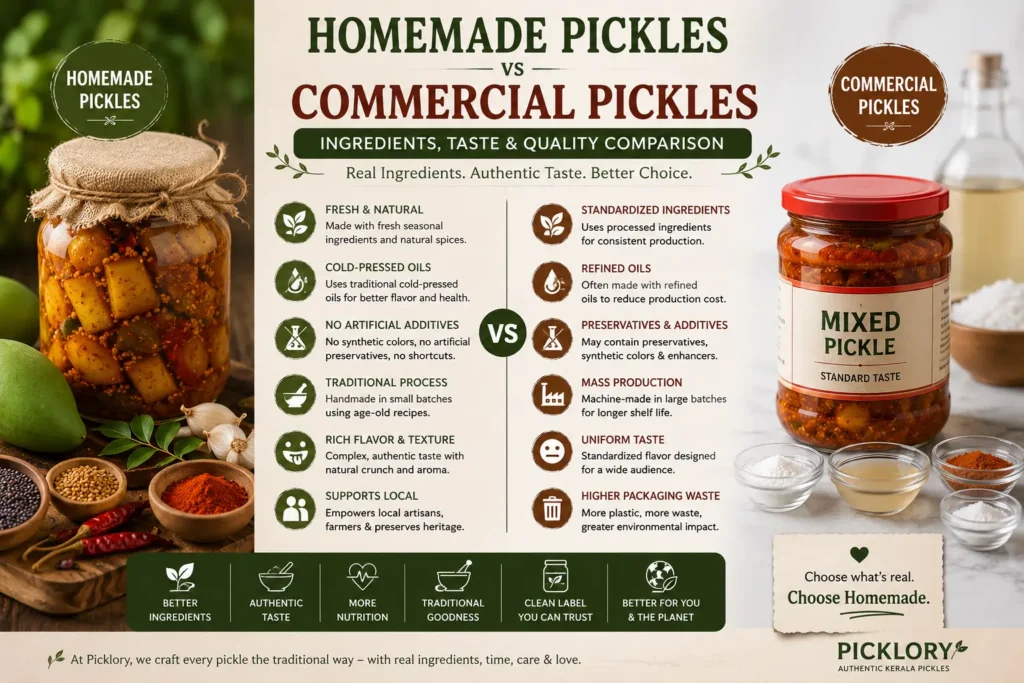
Homemade Pickles vs Commercial Pickles: Quick Comparison
| Feature | Homemade Pickles | Commercial Pickles |
| Ingredients | Fresh, carefully selected ingredients | Standardized ingredients |
| Oil | Often cold-pressed oils | Often refined oils |
| Spices | Freshly ground spices | Processed spice blends |
| Preservatives | Natural preservation methods | May include added preservatives |
| Production | Small batch handmade | Factory production |
| Taste | Regional and complex | Consistent and uniform |
| Texture | Natural crunch | Depends on processing |
| Customization | Easy to adjust | Limited options |
| Authenticity | Traditional recipes | Mass-market recipes |
Ingredients & Quality: What Goes Inside Matters
The biggest difference between homemade and commercial pickles begins with ingredients.
Homemade Pickles: Fresh and Traditional Ingredients
Traditional homemade pickles usually focus on ingredient quality.
Common ingredients include:
- Fresh seasonal fruits and vegetables
- Natural spices
- Cold-pressed oils
- Rock salt or traditional salt methods
- Hand-ground spice mixtures
For example, a traditional Kerala mango pickle often depends on the freshness of raw mangoes, quality chilli powder, mustard, garlic, and oil.
The ingredients are usually selected based on availability, flavour, and family recipes.
Fresh Seasonal Produce
Homemade pickles often follow seasonal availability.
Fresh mangoes, lemons, garlic, gooseberries, and vegetables are selected during their best quality period.
This helps maintain:
- Better texture
- Natural aroma
- Stronger flavour
Cold-Pressed Oils
Oil plays an important role in pickle preparation.
Many traditional pickle makers prefer oils such as:
- Sesame oil
- Mustard oil
- Coconut oil (regional variations)
Cold-pressed oils are valued because they retain natural characteristics and contribute to the overall flavour profile.
Hand-Ground Spices
Spices are one of the biggest reasons homemade pickles develop deeper flavours.
Freshly prepared spice mixes can provide:
- Better aroma
- Balanced heat
- Layered taste
Commercial Pickles: Standardized Production
Commercial pickle manufacturers need consistency.
A jar purchased today should taste similar to another jar produced months later.
To achieve this, some products may use:
- Processed spice blends
- Refined oils
- Preservatives
- Acidity regulators
- Stabilizers
However, commercial pickle quality varies between brands. Some focus on premium ingredients, while others prioritize cost and long shelf life.
The important factor is reading ingredient labels carefully.
Health & Nutrition Comparison
Pickles are traditionally valued for their flavour, but their nutritional profile depends on preparation.
Natural Fermentation and Digestion
Some traditional pickles use fermentation as part of preservation.
Natural fermentation can create beneficial microorganisms known as probiotics.
Fermented foods may support:
- Gut microbiome diversity
- Digestion
- Natural enzyme activity
However, not every pickle is fermented. Many are preserved through salt, oil, acidity, or other methods.
Sodium and Additives in Commercial Pickles
Many commercial pickles are designed for longer shelf life.
Depending on the product, they may contain:
- Higher sodium levels
- Added preservatives
- Sugar adjustments
- Processing aids
This does not automatically make every commercial pickle unhealthy, but it shows why ingredient awareness matters.
Traditional Homemade Process vs Industrial Manufacturing
The production method creates major differences.
Traditional Homemade Pickle Making
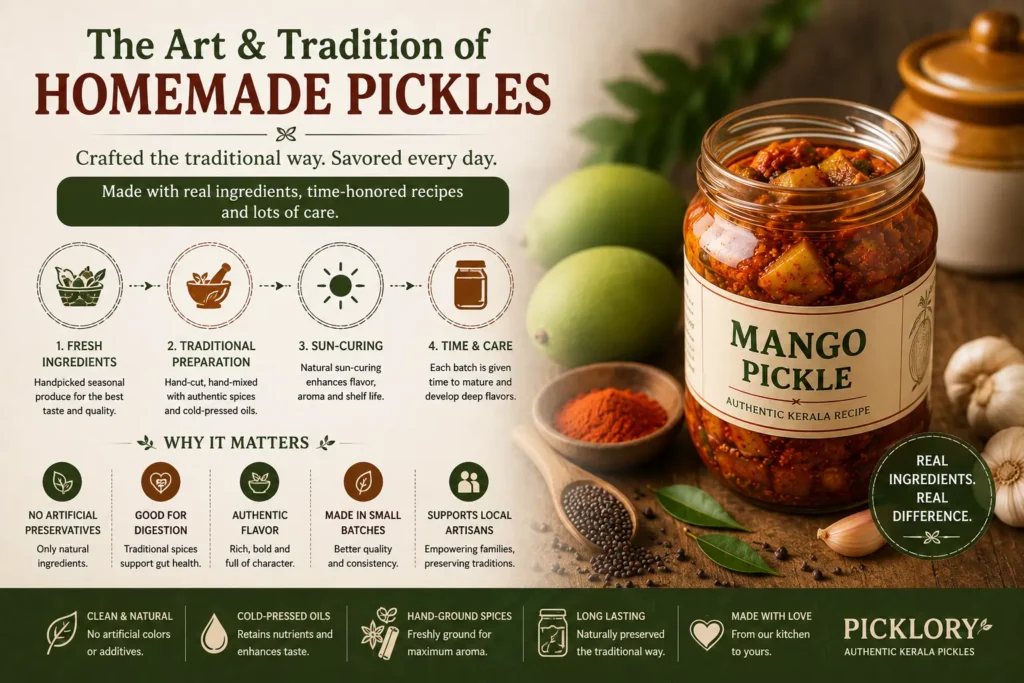
Traditional pickle preparation often includes:
Small Batch Preparation
Small batches allow more attention to:
- Ingredient quality
- Spice balance
- Texture
Sun-Curing
Many traditional pickles develop flavour through natural curing.
Sun exposure helps ingredients mature and allows spices and oils to blend.
Family Recipes
Recipes passed through generations often preserve:
- Regional identity
- Cultural practices
- Unique flavour combinations
Handmade Care
Each stage requires attention:
- Cutting ingredients
- Mixing spices
- Balancing oil and salt
- Storing properly
Commercial Pickle Manufacturing
Industrial production focuses on efficiency.
Common characteristics include:
- Large-scale processing
- Standardized recipes
- Controlled manufacturing
- Longer shelf-life planning
Factory production helps make pickles widely available but may not always replicate the complexity of traditional methods.
Taste & Experience: Why Homemade Pickles Feel Different
Taste is where many people notice the difference first.
Homemade Pickle Flavour Profile
Traditional homemade pickles often have:
Complex Spice Layers
Instead of one dominant flavour, you may experience:
- Spice aroma
- Tanginess
- Heat
- Natural ingredient taste
Regional Character
Different regions create different pickle identities.
Kerala-style pickles are known for bold flavours using local ingredients and traditional spice combinations.
Natural Texture
Because ingredients are often prepared carefully, homemade pickles can maintain a satisfying crunch.
Commercial Pickle Taste
Commercial pickles are usually created to provide:
- Consistent flavour
- Familiar taste
- Longer availability
The advantage is reliability.
The limitation is that standardized recipes may reduce the uniqueness found in homemade versions.
Customization: Homemade Has More Flexibility
One major advantage of homemade pickles is personalization.
Families can adjust:
- Spice levels
- Salt quantity
- Oil amount
- Ingredients
Every household may have its own version of the same pickle.
That personal touch is difficult to achieve in mass production.
Sustainability and Social Impact
Food choices affect more than taste.
Homemade Pickles Support Local Food Systems
Small-batch pickle making can support:
- Local farmers
- Traditional food makers
- Rural entrepreneurs
- Culinary heritage
Using locally sourced ingredients can reduce unnecessary transportation.
Commercial Pickles and Packaging
Commercial production often requires:
- Industrial packaging
- Large-scale distribution
- Longer storage systems
This makes products widely accessible but can increase packaging and supply-chain impact.
Why Picklory Chooses the Homemade Way
At Picklory, homemade pickles represent more than a recipe.
They represent:
- Traditional Kerala flavours
- Carefully selected ingredients
- Small-batch preparation
- Authentic spice combinations
- Handmade craftsmanship
The focus is on creating pickles that respect traditional methods while maintaining quality and transparency.
Every jar reflects the idea that good food comes from thoughtful preparation.
Which Pickle Should You Choose?
The answer depends on what you value.
Choose Homemade Pickles If You Prefer:
- Traditional flavours
- Natural ingredients
- Regional recipes
- Handmade quality
- Ingredient transparency
Choose Commercial Pickles If You Prefer:
- Easy availability
- Consistent taste
- Longer storage convenience
The better choice depends on your priorities.
Final Thoughts
The difference between homemade pickles and commercial pickles is not only about flavour.
It is about:
- Ingredients
- Preparation methods
- Preservation techniques
- Cultural traditions
- Food craftsmanship
Commercial pickles provide convenience and consistency, while homemade pickles preserve authenticity, regional identity, and traditional food practices.
For those who value natural ingredients and traditional flavours, homemade pickles offer a food experience that goes beyond a simple condiment.
Explore Picklory’s handcrafted Kerala pickle collection and experience the taste of traditional pickle making.
FAQs
1. What is the difference between homemade and commercial pickles?
Homemade pickles usually use traditional methods, fresh ingredients, and small-batch preparation, while commercial pickles are produced on a larger scale with standardized processes.
2. Are homemade pickles healthier than commercial pickles?
It depends on ingredients and preparation. Homemade pickles often offer ingredient transparency, while commercial varieties differ by brand.
3. Do homemade pickles contain preservatives?
Many homemade pickles rely on traditional preservation methods such as salt, oil, drying, and proper storage instead of added preservatives.
4. Why do homemade pickles taste better?
They often develop deeper flavours because of fresh ingredients, traditional spice combinations, and longer flavour development.
5. Why are commercial pickles more consistent?
Commercial manufacturers use standardized recipes and controlled production methods to maintain similar taste across batches.
6. Which oils are commonly used in homemade pickles?
Traditional pickles may use oils like sesame oil, mustard oil, or other regionally preferred oils.
7. Can homemade pickles last as long as commercial pickles?
Properly prepared and stored homemade pickles can have a long shelf life, depending on ingredients and preservation methods.
8. What makes Kerala homemade pickles unique?
Kerala pickles are known for bold spices, regional ingredients, and traditional preparation styles.