
Reading Time: 10–12 Minutes
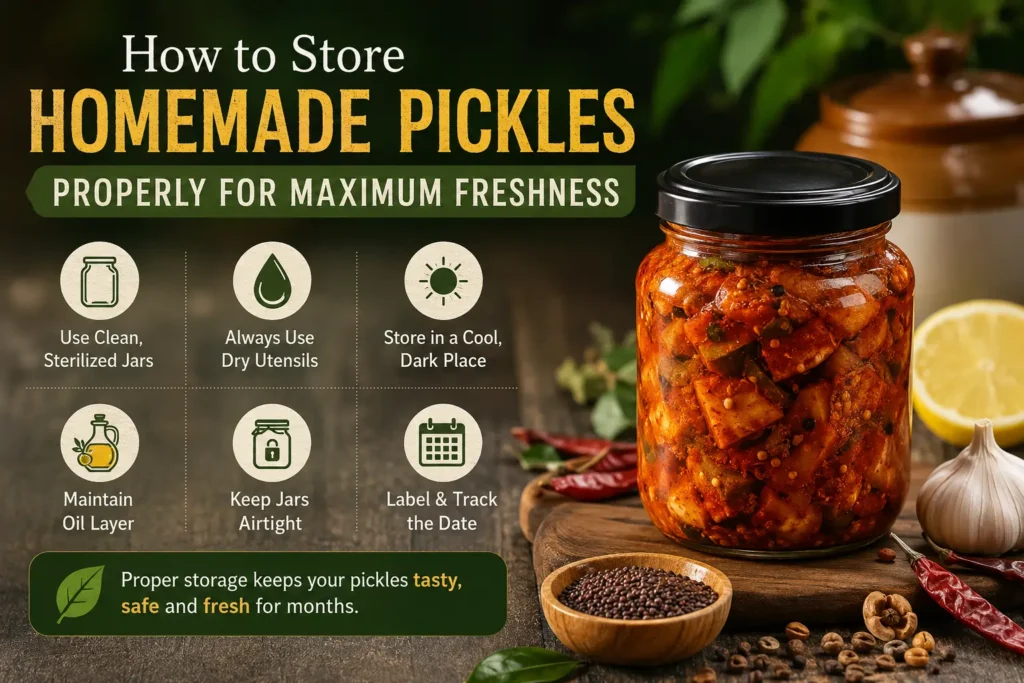
Homemade pickles are more than just a side dish—they’re a tradition passed down through generations. Whether it’s a spicy Kerala mango pickle, tangy lemon pickle, or flavorful garlic pickle, proper storage plays a crucial role in preserving its taste, aroma, texture, and shelf life.
Many people believe making a great pickle is enough. In reality, even the best homemade pickle can spoil if it’s stored incorrectly. Moisture, air, contaminated utensils, unsuitable containers, and improper storage conditions are among the most common reasons homemade pickles develop mold, lose flavor, or spoil prematurely.
Fortunately, storing homemade pickles isn’t complicated. With the right containers, proper sterilization, good hygiene, and traditional preservation techniques, your pickles can remain fresh and delicious for months.
In this guide, you’ll learn:
- The best containers for homemade pickles
- Traditional Kerala storage methods
- Natural preservation techniques
- How to sterilize pickle jars
- Pantry vs refrigerator storage
- Common storage mistakes
- Signs that your pickle has spoiled
- Expert tips to maximize freshness naturally
Why Proper Storage Matters
A homemade pickle contains no artificial preservatives in most traditional recipes. Instead, it relies on natural preservation through:
- Salt
- Oil
- Vinegar or lemon juice
- Spices
- Proper storage conditions
When these elements remain balanced, harmful microorganisms struggle to grow.
Proper storage helps:
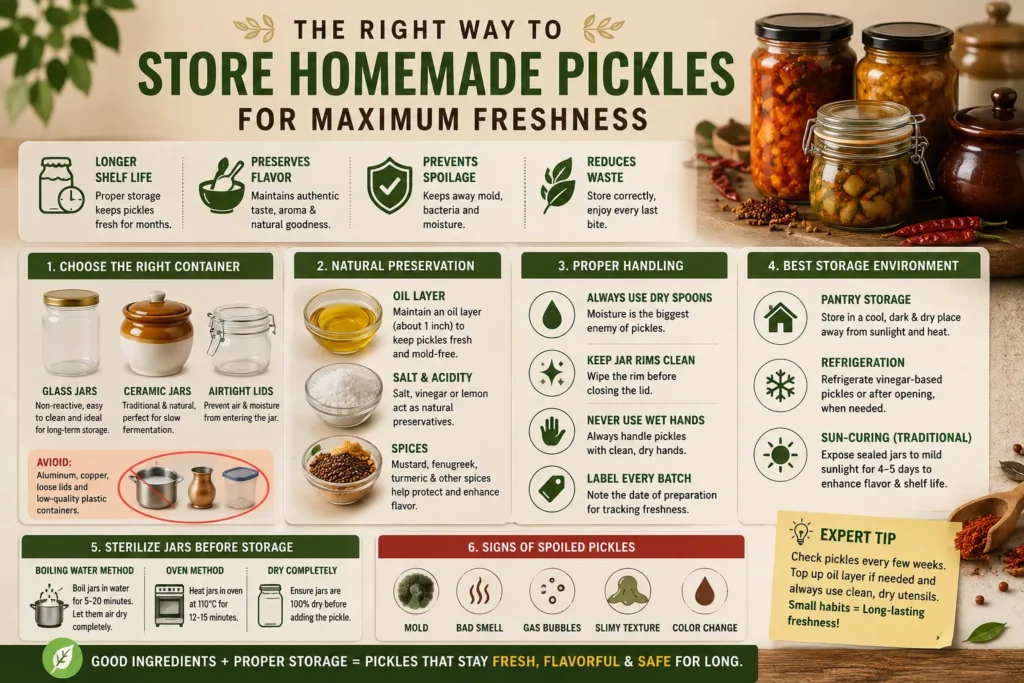
- Extend shelf life
- Preserve authentic flavor
- Maintain crunch and texture
- Prevent mold formation
- Reduce food waste
- Protect the natural aroma of spices
Simply put, good storage is as important as the recipe itself.
Choosing the Right Storage Container
The container you choose directly affects how long your pickle stays fresh.
Glass Jars – The Best Choice
Glass jars remain the gold standard for storing homemade pickles because they are:
- Non-reactive
- Odor resistant
- Easy to sterilize
- Easy to clean
- Long-lasting
- Transparent for easy inspection
Unlike metal, glass doesn’t react with acidic ingredients like vinegar or lemon juice.
Best for:
- Mango pickle
- Lemon pickle
- Garlic pickle
- Gooseberry pickle
- Mixed vegetable pickle
Ceramic or Earthenware Jars
Traditional Kerala households have used ceramic jars (bharani) for generations.
These containers:
- Stay naturally cool
- Support traditional fermentation
- Preserve authentic flavor
- Protect pickles from sunlight
- Last for years when maintained properly
If you’re making large batches, ceramic containers remain one of the best traditional storage options.
Airtight Lids Matter
Even the best jar won’t help if the lid isn’t airtight.
Choose lids with:
- Stainless steel rings
- Plastic-coated metal lids
- Food-grade non-reactive plastic lids
A proper seal prevents:
- Moisture entry
- Air exposure
- Mold formation
- Flavor loss
Containers to Avoid
Avoid storing homemade pickles in:
| Container | Why It Should Be Avoided |
| Aluminum | Reacts with acids |
| Copper | Can corrode over time |
| Cheap plastic | May absorb oil, odor, and stain |
| Damaged jars | Difficult to seal properly |
Glass vs Ceramic Containers
| Feature | Glass Jar | Ceramic Jar |
| Non-reactive | ✔ | ✔ |
| Easy to clean | ✔ | Moderate |
| Traditional storage | Moderate | Excellent |
| Fermentation | Good | Excellent |
| Easy to inspect | Excellent | Poor |
| Long-term storage | Excellent | Excellent |
Natural Preservation Techniques That Actually Work
Traditional Indian pickles stay fresh because they rely on natural preservatives rather than artificial chemicals.
Maintain an Oil Layer
Oil creates a protective barrier between the pickle and air.
A proper oil layer:
- Blocks oxygen
- Prevents mold
- Preserves flavor
- Reduces bacterial growth
For many Kerala-style pickles, ensure the oil remains approximately 1 inch above the pickle surface. If the oil level drops over time, top it up with freshly heated and cooled oil of the same type used in the recipe.
Suitable oils include:
- Mustard oil
- Groundnut oil
- Sesame oil (for specific regional recipes)
Salt and Acidity
Salt is one of nature’s oldest food preservatives.
It helps by:
- Drawing moisture out of ingredients
- Reducing microbial activity
- Improving shelf life
Similarly, vinegar and lemon juice lower the pH, making it difficult for spoilage-causing microorganisms to grow.
Traditional Spices Also Help
Many spices used in Indian pickles naturally contribute to preservation.
Examples include:
- Mustard seeds
- Turmeric
- Fenugreek
- Asafoetida
- Red chilli powder
These ingredients not only enhance flavor but also support longer storage when used correctly.
Proper Handling Practices
Even perfectly stored pickles can spoil through poor handling.
Always Use Dry Spoons
Never insert:
- Wet spoons
- Wet forks
- Moist serving utensils
Even a few drops of water can introduce microorganisms that encourage mold growth.
Never Use Wet Hands
Avoid touching the pickle directly.
Always transfer pickles using a clean, dry spoon.
Wipe Jar Rims Clean
Oil and food residue around the rim prevent airtight sealing.
After every use:
- Wipe the rim
- Clean the lid
- Close immediately
Label Every Batch
Always note:
- Preparation date
- Opening date
- Type of pickle
This helps rotate stock and monitor freshness.
Don’t Mix Old and New Pickles
Adding fresh pickle to an older batch can introduce moisture, alter salt and oil balance, and reduce shelf life.
Always store new batches separately.
Best Storage Environment
Pantry Storage
Most traditional oil-based Indian pickles can be stored in:
- Cool place
- Dry cupboard
- Dark pantry
- Away from direct sunlight
- Away from heat sources
Avoid placing pickle jars near:
- Gas stoves
- Ovens
- Windows
- Dishwashers
Should Homemade Pickles Be Refrigerated?
It depends on the type of pickle.
| Pickle Type | Refrigeration Needed? |
| Oil-based mango pickle | Usually No |
| Lemon pickle | Optional |
| Vinegar pickle | Recommended after opening |
| Refrigerated quick pickles | Yes |
| Fresh vegetable pickles | Yes |
If you live in a humid or very hot climate, refrigeration can significantly extend freshness after opening.
Traditional Sun-Curing
One unique practice followed in many Kerala homes is occasional sun-curing.
The sealed jar is placed in mild sunlight for 4–5 days during suitable weather.
Benefits include:
- Enhances flavor
- Redistributes oil
- Helps maintain preservation
- Improves spice infusion
Avoid excessive heat that may damage the pickle.
How to Sterilize Pickle Jars
Sterilization removes microorganisms before storage.
Method 1: Boiling Water
- Wash jars thoroughly.
- Place them in boiling water.
- Boil for 5–20 minutes.
- Remove carefully.
- Allow them to air dry completely.
Method 2: Oven Sterilization
- Wash jars.
- Place them in an oven at 110°C.
- Heat for 12–15 minutes.
- Remove carefully.
- Cool completely before filling.
Drying Is Essential
Sterilization alone isn’t enough.
Every jar must be completely dry before adding pickle.
Even tiny amounts of trapped moisture increase spoilage risk.
How Long Do Homemade Pickles Last?
Shelf life depends on ingredients, preservation method, and storage conditions.
| Pickle Type | Approximate Shelf Life |
| Oil-based pickle | 6–12 months |
| Lemon pickle | 6–12 months |
| Vinegar pickle | 8–12 months |
| Refrigerated quick pickle | 2–6 weeks |
| Fermented pickle | Several months (properly stored) |
These are general estimates. Shelf life varies based on hygiene, recipe, storage conditions, and whether the jar has been opened.
Signs Your Homemade Pickles Have Spoiled
Discard homemade pickles if you notice:
- Visible mold
- Foul smell
- Gas bubbles or fizzing (when not expected)
- Slimy texture
- Significant color changes
- Unusual sourness beyond the recipe
- Leaking jars
When in doubt, it’s safer to discard the pickle than risk foodborne illness.
Common Storage Mistakes to Avoid
Many spoilage problems come from small habits.
Avoid these common mistakes:
- Using wet spoons
- Leaving lids loose
- Storing jars in sunlight
- Filling jars before they’re dry
- Using reactive metal containers
- Allowing the oil layer to drop below the pickle
- Mixing fresh and old batches
- Handling pickles with wet hands
- Ignoring mold or unusual odors
Picklory’s Traditional Storage Approach
At Picklory, proper storage begins long before the pickle reaches your table.
Traditional Kerala recipes rely on carefully selected ingredients, balanced salt and spice levels, appropriate oil coverage, hygienic preparation, and suitable storage practices to help maintain freshness naturally. By combining time-tested methods with careful quality control, homemade pickles retain their authentic flavor without depending on unnecessary artificial preservatives.
Quick Storage Checklist
Before storing your homemade pickle, make sure you have:
- ✓ Sterilized the jar
- ✓ Dried the jar completely
- ✓ Used a glass or ceramic container
- ✓ Sealed it with an airtight lid
- ✓ Maintained a protective oil layer (if required)
- ✓ Stored it in a cool, dry place
- ✓ Used only dry utensils
- ✓ Labeled the preparation date
- ✓ Checked periodically for spoilage
Frequently Asked Questions
What is the best container for homemade pickles?
Glass jars are generally the best choice because they are non-reactive, easy to sterilize, and do not absorb odors. Ceramic jars are also excellent for traditional long-term storage.
Can homemade pickles be stored outside the refrigerator?
Yes. Many traditional oil-based Indian pickles can be stored in a cool, dry pantry if prepared and preserved correctly. Refrigeration is often beneficial after opening or in hot, humid climates.
Why do homemade pickles develop mold?
The most common causes are moisture contamination, wet utensils, insufficient oil coverage, poor sterilization, loose lids, or improper storage conditions.
How often should I check stored pickles?
Inspect jars every few weeks for changes in smell, appearance, oil level, or signs of spoilage. Address minor issues, such as topping up the oil layer when appropriate, before they become larger problems.
Can I reuse pickle jars?
Yes, provided they are free of cracks, thoroughly cleaned, sterilized, and completely dry before reuse.
Final Thoughts
Knowing how to store homemade pickles properly for maximum freshness is just as important as mastering the recipe itself. The right container, careful sterilization, natural preservation techniques, and simple hygiene habits work together to protect flavor, texture, and shelf life.
Whether you’re preparing a traditional Kerala mango pickle, a tangy lemon pickle, or a spicy garlic pickle, following these best practices helps ensure every jar stays delicious for months.
If you enjoy authentic homemade pickles prepared using traditional Kerala methods, explore Picklory’s range of handcrafted pickles and discover how time-tested recipes and proper preservation come together to deliver exceptional taste in every jar.