
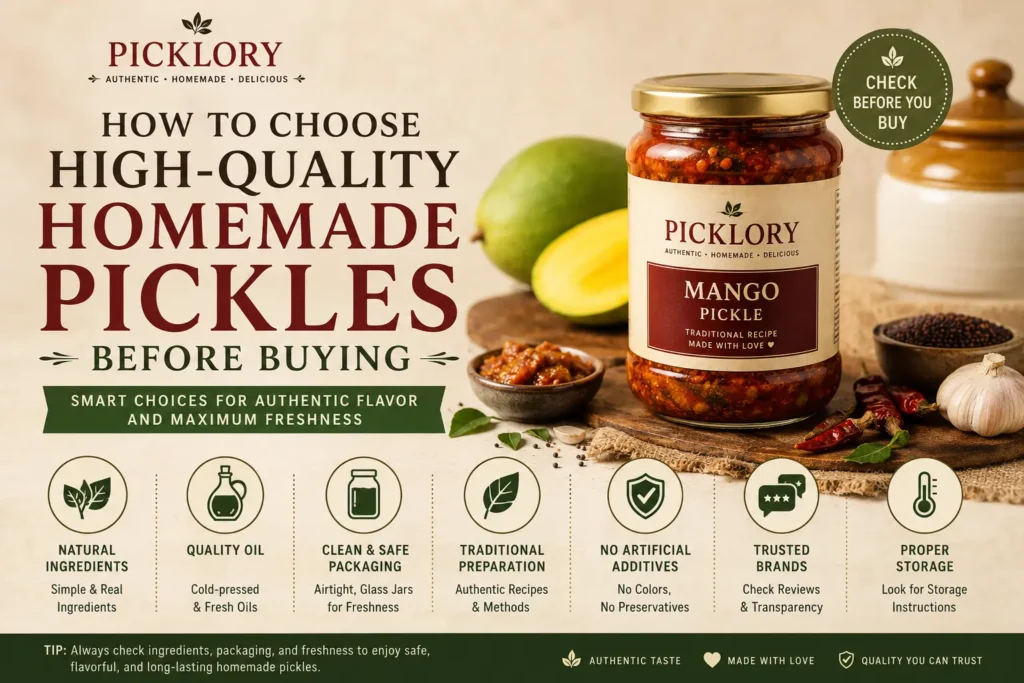
Homemade pickles can elevate a simple meal with their bold flavors, natural fermentation, and traditional spice blends. But not every jar labeled “homemade” offers the same quality. Some products may contain excessive preservatives, poor-quality oil, artificial colors, or improper storage methods that affect freshness and taste.
This guide will help you identify high-quality homemade pickles before buying by checking ingredients, preparation methods, packaging, storage conditions, and brand transparency. Whether you’re shopping online or in a local market, these practical tips will help you choose pickles that are authentic, flavorful, and safe to enjoy.
Why Choosing Quality Homemade Pickles Matters
A good homemade pickle is more than just a side dish. It reflects the quality of ingredients, the care taken during preparation, and the preservation methods used to maintain freshness.
Choosing high-quality homemade pickles matters because it affects:
- Flavor: Authentic pickles should have balanced tangy, spicy, salty, and aromatic notes.
- Freshness: Properly preserved pickles maintain their texture and taste for a longer time.
- Food Safety: Correct salt, oil, vinegar, and hygiene practices reduce the risk of spoilage.
- Nutritional Value: Naturally prepared pickles often retain beneficial nutrients and antioxidants from their ingredients and spices.
- Authenticity: Traditional preparation methods preserve regional flavors and cultural culinary practices.
Check the Ingredient List Carefully
The ingredient list is the first clue to a pickle’s quality. A premium homemade pickle should contain simple, recognizable ingredients rather than a long list of artificial additives.
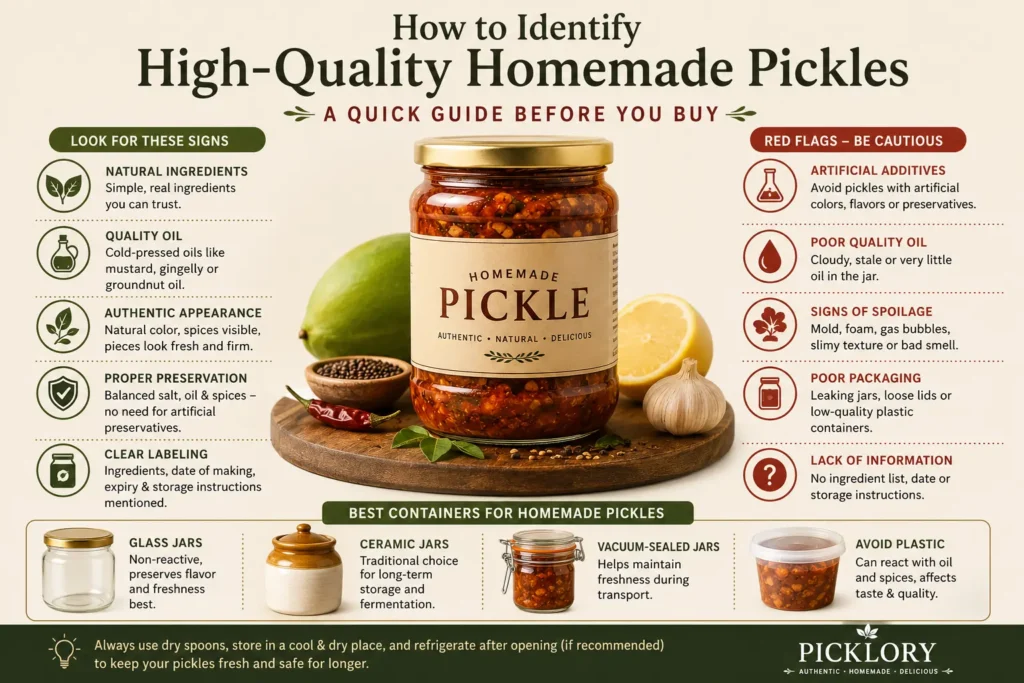
Look for natural ingredients
- Fresh fruits or vegetables such as mango, lemon, gooseberry, garlic, or mixed vegetables.
- Natural preservatives such as salt, vinegar, or lemon juice.
- Traditional spices such as mustard seeds, fenugreek, turmeric, red chili powder, and asafoetida.
- Cold-pressed or traditionally used oils such as mustard oil, gingelly (sesame) oil, or groundnut oil.
Avoid these red flags
- Artificial colors or flavor enhancers.
- Excessive preservatives that make the pickle taste unnatural.
- Refined oils with no mention of the oil type.
- Unclear ingredient descriptions such as “mixed spices” without further details.
Quick check: If the ingredient list reads like something you could make in your own kitchen, it is usually a better sign of authenticity.
Assess the Quality of the Oil
Oil plays a crucial role in many Indian homemade pickles. It acts as a natural preservative, protects the pickle from moisture and air, and contributes significantly to its flavor profile.
Preferred oils
| Oil Type | Why It Matters |
| Mustard oil | Common in North Indian pickles; adds pungency and helps preservation. |
| Gingelly (sesame) oil | Popular in South Indian pickles; adds a rich, nutty flavor. |
| Groundnut oil | Often used in traditional recipes for its stable flavor and texture. |
Signs of poor oil quality
- The oil appears cloudy or rancid.
- There is very little oil covering the pickle, especially in oil-based varieties.
- The label does not mention the type of oil used.
Examine the Texture and Appearance
A high-quality homemade pickle should look fresh, vibrant, and well-preserved. The appearance can reveal a lot about the preparation and storage conditions.
What to look for
- Natural color from the fruit, vegetable, and spices.
- Pieces that are firm but tender, not mushy.
- Spices evenly distributed throughout the jar.
- A clean layer of oil or brine, depending on the pickle type.
Warning signs
- Unnatural bright colors that may indicate artificial coloring.
- Excessive separation of oil and solids.
- Mold, foam, gas bubbles, or slimy texture.
- Discolored pieces or an unpleasant odor when the jar is opened.
Choose the Right Packaging
Packaging affects both freshness and food safety. High-quality homemade pickles are usually packed in non-reactive containers that preserve flavor and prevent contamination.
| Container Type | Recommendation |
| Glass jars | Best option; non-reactive and preserves flavor well. |
| Ceramic jars | Traditional and suitable for long-term storage. |
| Vacuum-sealed jars | Good for maintaining freshness during transport. |
| Plastic containers | Less desirable, especially for long-term storage or acidic pickles. |
Packaging checklist
- The jar should be clean, sealed, and free from leaks.
- The lid should close tightly and show no signs of rust or damage.
- The label should clearly mention ingredients, preparation date, expiry date, and storage instructions.
- The packaging should protect the pickle from light, moisture, and air exposure.
Understand Traditional Preservation Methods
Authentic homemade pickles rely on natural preservation techniques rather than heavy artificial preservatives. Understanding these methods can help you judge whether a pickle is genuinely homemade.
Natural preservatives used in homemade pickles
- Salt: Draws out moisture and inhibits microbial growth.
- Oil: Forms a protective barrier against air and moisture.
- Vinegar or lemon juice: Increases acidity and helps preserve freshness.
- Spices: Ingredients such as turmeric, mustard seeds, and fenugreek have natural preservative properties.
Traditional signs of quality
- The pickle has a balanced salt and spice level.
- The oil layer is sufficient and evenly distributed.
- The flavor tastes matured rather than artificially enhanced.
- The texture reflects proper curing and fermentation.
Consider Regional Specialty and Authenticity
Different regions in India have unique pickle traditions. Knowing the characteristics of regional varieties can help you identify authentic products.
| Region | Common Specialty |
| South India | Avakaya, lemon pickle, gongura pickle. |
| Punjab | Mango pickle, mixed vegetable pickle, pachranga pickle. |
| Bengal | Kasundi and sweet-tangy pickles. |
| Rajasthan | Ker-sangri pickle and spicy chili pickles. |
| Kerala | Mango pickle, lemon pickle, garlic pickle, fish pickle. |
If a product claims to be a regional specialty, check whether the ingredients and flavor profile match the traditional preparation style of that region.
Read Reviews and Brand Information
When buying homemade pickles online, reviews and brand transparency become especially important.
What to look for in reviews
- Comments about authentic taste and freshness.
- Positive feedback on packaging and sealing.
- Consistent mentions of natural ingredients and traditional preparation.
- Reports of good shelf life when stored correctly.
Signs of a trustworthy brand
- Clear information about ingredients and preparation methods.
- Transparent sourcing of fruits, vegetables, spices, and oils.
- Proper labeling with manufacturing and expiry dates.
- Storage instructions provided on the packaging.
- Customer support or contact information available.
Compare Price with Quality
Price can provide a clue, but it should not be the only deciding factor. Extremely cheap homemade pickles may use lower-quality ingredients, refined oils, or shortcuts in preparation.
A reasonable price often reflects
- Fresh, high-quality produce.
- Traditional handcrafting and curing processes.
- Good-quality oils and spices.
- Proper packaging and storage practices.
Be cautious if
- The price is significantly lower than similar homemade products.
- The brand provides little information about ingredients or preparation.
- The packaging appears low-quality or poorly sealed.
Check Storage and Shelf-Life Information
Proper storage is essential for maintaining pickle quality. Before buying, check whether the seller provides clear storage instructions and realistic shelf-life information.
Storage details to check
- Whether refrigeration is recommended after opening.
- Whether the pickle should be stored in a cool, dry place.
- Whether dry spoons should be used to avoid moisture contamination.
- The expected shelf life under proper storage conditions.
A brand that explains storage clearly demonstrates greater awareness of food safety and product quality.
Questions to Ask Before Buying
If you are purchasing directly from a seller or small homemade pickle maker, ask a few simple questions:
- What ingredients are used in this pickle?
- Which oil is used for preservation?
- Is the pickle made in small batches?
- How is the jar sterilized and sealed?
- What is the recommended storage method after opening?
- Does the product contain any artificial preservatives or colors?
Clear, confident answers to these questions are usually a good sign that the seller takes quality seriously.
Common Red Flags to Avoid
- Artificial colors: May make the pickle look attractive but reduce authenticity.
- Strong chemical smell: Can indicate excessive preservatives or poor-quality ingredients.
- Leaking or damaged packaging: Increases the risk of contamination.
- No ingredient list: Makes it difficult to assess quality and allergens.
- Unrealistically long shelf life: May suggest heavy use of preservatives.
- Visible mold or fermentation issues: Indicates improper storage or spoilage.
Important: If a pickle shows signs of mold, gas buildup, sliminess, or a foul odor, do not consume it, even if the expiry date has not passed.
Quick Checklist for Buying High-Quality Homemade Pickles
- Ingredients are natural and clearly listed.
- The oil type is mentioned and appears fresh.
- The pickle has natural color and firm texture.
- Packaging is clean, airtight, and preferably glass or ceramic.
- The label includes manufacturing date, expiry date, and storage instructions.
- The brand or seller provides transparent information about preparation methods.
- Customer reviews mention authentic taste and freshness.
- There are no signs of mold, leakage, or spoilage.
Frequently Asked Questions
What is the best container for homemade pickles?
Glass jars are generally the best option because they are non-reactive, easy to clean, and preserve flavor well. Ceramic jars are also suitable for traditional long-term storage.
How can I tell if a homemade pickle is fresh?
Fresh homemade pickles should have a pleasant aroma, natural color, firm texture, and no signs of mold, sliminess, or gas buildup.
Are homemade pickles healthier than commercial pickles?
Homemade pickles can be healthier when they use natural ingredients, traditional spices, and minimal artificial preservatives. However, they should still be consumed in moderation because they can be high in salt and oil.
Should homemade pickles be refrigerated?
Many homemade pickles can be stored in a cool, dry place before opening. After opening, refrigeration may help maintain freshness, especially in humid climates or for vinegar-based pickles.
Final Thoughts
Choosing high-quality homemade pickles before buying requires attention to ingredients, oil quality, packaging, traditional preparation methods, and storage information. Authentic homemade pickles should taste fresh, balanced, and naturally preserved, without relying heavily on artificial additives.
By using the checklist in this guide, you can confidently select homemade pickles that offer better flavor, freshness, and authenticity. Whether you prefer mango pickle, lemon pickle, garlic pickle, or mixed vegetable pickle, choosing a well-made product ensures a safer and more enjoyable experience.
For the best results, buy from brands or makers who are transparent about their ingredients, preparation methods, and storage practices. This is the clearest sign that the pickle has been crafted with care and attention to quality.